
Start in Nampo before the day gets away from you: this is a compact place to connect food, markets, and city landmarks on foot. Jagalchi, Gukje Market, and BIFF Square sit within the same broad central area, though crowds and side streets can make short distances take longer than a map suggests. Wear shoes suited to uneven pavements, and choose two or three stops rather than trying to cover every lane.
Begin with central Nampo
If seafood is on your mind, visit Jagalchi and take time to see what is being sold before deciding where to eat. Nearby market streets offer a different kind of browsing, with household goods, clothing, and food stalls depending on the block. Check opening hours and current conditions before building the day around a particular shop or market section.
From the markets, BIFF Square gives you a busy pedestrian stretch and a convenient pause for a snack. Yongdusan Park is another nearby option, but the route rises away from the flatter market streets, so account for the climb. This is a good point to stop for lunch before crossing over to Yeongdo.
Cross over at your own pace
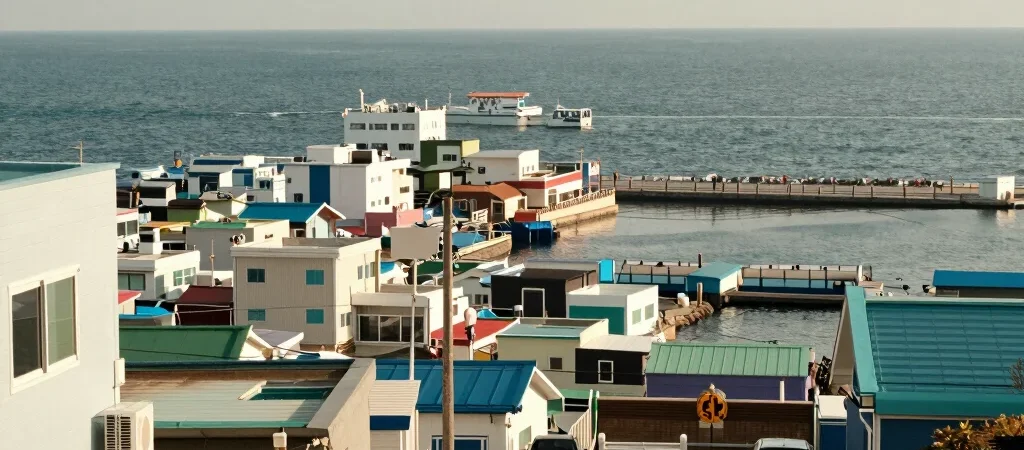
Yeongdo is close to central Busan, but its slopes and road layout make it feel like a separate leg of the day. Instead of assuming the whole island is walkable from Nampo, check a current transit map for a bus or taxi connection to the area you want to visit. Huinnyeoul Culture Village is known for coastal views and hillside lanes; the scenery comes with stairs, inclines, and homes where visitors should keep noise low.
Treat the waterfront viewpoints as places people live beside, not as a theme park. Keep to public paths, avoid blocking doorways for photos, and check signs for access restrictions or closures. If the weather is windy or rainy, shorten the outdoor portion and leave room to return by bus or taxi rather than relying on a long walk back.
Leave room for the return
The most satisfying version of this itinerary is not the one with the most pins saved. It is a morning in Nampo, a proper meal, one selected Yeongdo viewpoint, and enough time to get back without rushing through steep streets. Check your return route before you set off, especially if you are planning to stay out into the evening.
Bring water, keep your phone charged, and save the Korean names of your destination and accommodation. Bus stops and neighborhood entrances can be easier to identify by their Korean labels than by an English map alone. Let the shape of the day follow the terrain: markets first, hills later, and transit whenever your legs have had enough.