
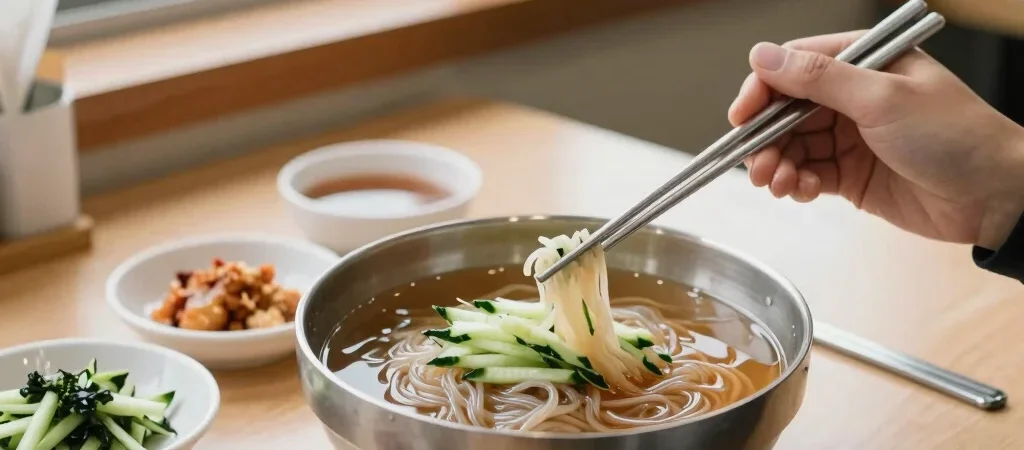
At a busy Busan lunch counter, the first useful question is often not “What is the most famous dish?” but “What kind of meal do I want right now?” Milmyeon is a cold, chewy wheat-noodle dish associated with Busan, while dwaeji gukbap is pork soup served with rice. Both are approachable starting points, and each gives you a different read on the city’s everyday food.
Choose noodles or soup
Milmyeon usually arrives in a chilled broth or with a spicy sauce, and shops may offer both styles. If you are unsure about heat, point to the broth version or ask whether the sauce is spicy; recipes and serving customs differ by restaurant. Look for the noodle dish in local eateries around central neighborhoods such as Nampo and Seomyeon, rather than expecting every café to serve it.
Dwaeji gukbap is a warming bowl of pork broth and rice, often accompanied by small side dishes and seasonings you can adjust at the table. Some restaurants serve rice in the soup, while others bring it separately, so follow the setup in front of you or watch how nearby diners eat. Add seasoning gradually: the broth may already be salted to your taste.
Read the small dishes
A spread of banchan, or side dishes, is part of the meal rather than a set of mystery appetizers. Kimchi, pickled vegetables, and sauces vary by place, and it is normal to eat them alongside the main dish. If something is unfamiliar, try a small taste first; if you want more of a side, a polite request may be understood, though restaurant policies vary.
Busan’s coastal setting also means seafood appears across market stalls and restaurant menus, including raw fish and grilled or stewed dishes. Jagalchi Market is a well-known place to encounter the city’s seafood trade, but menus, ordering arrangements, and prices differ from stall to stall. Ask what a dish includes before ordering, especially if you have allergies or dietary restrictions, and use a translation app or written Korean phrase to make the details clear.
Keep ordering comfortable
Save the Korean names of one or two dishes you want to try, and show them when a menu is difficult to read. Useful terms to recognize include milmyeon for cold wheat noodles and dwaeji gukbap for pork soup with rice. A photo can help identify a dish, but confirm ingredients directly when they matter to your health.
For an easy first food day, have milmyeon for lunch and leave time to browse a market or neighborhood streets afterward. On a cooler evening, choose a sit-down gukbap restaurant and take the meal slowly. The best order is the one you can understand, enjoy, and comfortably ask about.